Thursday, April 6, 2017

Going Green, a Journey of Medical Cannabis

On November 8th, 2016, Florida voters went to the polls and cast their ballots to pass medical marijuana as an alternative chronic pain treatment option. Amendment 2 under new Florida law states, a person may possess and use marijuana if he or she is doing so to treat a "debilitating medical condition," which includes but not limited to: PTSD, cancer, epilepsy, glaucoma, HIV, AIDS, ALS, Crohn's or Parkinson's disease and multiple sclerosis. Amendment 2 passed with an overwhelming 71% vote, and for the first time granting the state of Florida and board certified doctors to prescribe low-THC cannabis and other medicinal forms of the cannabinoid. Even though the 5 page document which embodies amendment 2 is relatively small, a lot of ground work is still needed by lawmakers and legislation to prepare the state for medical marijuana distribution. Patients with a valid state issued ID, medical documentation of "debilitating medical condition," and no previous drug/criminal history are eligible. This is where I come in.
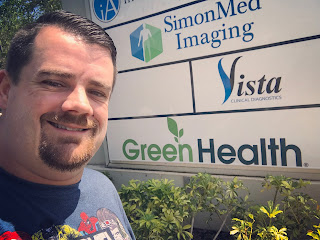
I waited a few months after January 3rd, 2017, when the law took effect in Florida, to search for a certified doctor who prescribed medical marijuana that I felt comfortable with. The main reason for my delay was to follow up with my own research into the process, and understand how this new system works for patients from the outside. I am documenting my complete journey, in hopes of offering educational value and assistance to patients who are seeking the same level of care as I. After hours of my own investigating, I was finally able to settle on my doctor here in the Orlando, FL metro area. He is Dr. Jason Schultz, an Orlando based emergency medicine physician, and his practice under the Florida state-wide organization is called "Green Health." Green Health has multiple offices currently in Tampa, St. Petersburg, Orlando, Jacksonville, Miami, West Palm Beach and Fort Lauderdale.

So what exactly is the process for the state of Florida in obtaining a "medical marijuana" card? Getting an appointment is relatively easy, as they accept any appointments as new patients. The key, however, is that you must provide a primary or specialty doctor's summary stating your diagnosis on the outlined approved medical conditions for the state, which are outlined above. Let me be 100% clear, your medical insurance WILL NOT cover any of the treatment guidelines offered by the medical marijuana doctor's office. All visits to this office are $125 per visit, but we'll cover up front expenses later.

So, what does a medical marijuana doctor's office look like? If your first initial response was like mine, a 'hole-in-the-wall' building that just serves to hand out marijuana cards, you're poorly mistaken. Upon entering the building, which is home to many other medical companies like Vista Labs, and Simon Med radiology, I noticed it was very clean, and well maintained. Green Health is located on the second floor here in the Longwood, FL office. Upon entering the door, you're greeted with a Green Health insignia, and a rahter pristine establishment. I seriously had no gripes about the facility itself, and was very relieved to see the Green Health clinic office was actually more modern and upscale than I originally anticipated. One never knows what ordeals you're getting yourself into in going to these types of unknown and new places, especially one that prescribes cannabis.

The waiting room was very pleasant with low-lit ambient lighting, which was a perfect environment for those battling light sensitivity ailments. Again, very clean and modern. All patients fill out a 5-6 page questionnaire which are generalized insight into your medical conditions and the reason of your visit. The staff and nurses were all warm and welcoming, and greeted every patient with the same level of respect and sincerity. They also request your state issued ID which is used to determine your criminal status (if any), and validate your residency and home address. I had no hesitation in handing them my Florida state driver's license.

The exam rooms also followed suit with a modern feel, the floors were spotless. With any doctor appointment, I always can determine the caliber of establishment based on the overall cleanliness of the facility. Again, I'm thoroughly impressed with Green Health and the building facility. The nurse took my vitals, and politely asked me to wait as the doctor would be in shortly. The wait was less than 5 minutes, and Dr. James Schultz greeted me with a friendly smile and hand shake. His bedside manner was just remarkable, and super easy to talk to. He encourages patients to ask as many questions as you want, and that the time spent with him is truly valued. We spent about 20 minutes discussing my potential treatment plan and combination therapy for chronic pain management. I asked so many questions from cost, protocol, medical delivery etc.

So, let's get down to the real meat and potatoes of how Florida handles medical marijuana. Each doctor's visit with Green Health is $125 out of pocket, no insurance accepted. A minimum of two visits are required. Upon the second visit after 90 days, the physician can then legally recommend medical marijuana to patients. The 90 day waiting period is mandatory from your first visit. Every 45 days, a follow phone call is required to discuss dosing adjustments and any alterations to the treatment plan needed. This phone "check-in" is $20, and required every 45 days for medical delivery and marijuana card membership. After 90 days, the physician will then order the desired medications from one of the dispensaries located nearest to you within the state.

My local dispensary happens to be Knox Farms in Winter Garden, FL. So how much is it to purchase non-insurance based medical marijuana? A little more pricey than you think. With a limited number of dispensaries starting out, only seven currently in Florida, the prices are higher starting out. My doctor informed me that he would start me on a 24-hour chronic pain low-THC treatment plan. The regimen would be comprised 1 cannabis pill daily that lasts 12 hours for daytime activity, mouth drops for nighttime and a vapor for breakthrough pain related episodes. With these three medications from the dispensary, my total will range from $100-150 every 45 days out of pocket expenses for the first month. There is also a $20 dispensary deliver fee, in which my prescriptions will be delivered discretely to my house from Knox Farms. Dr. Schultz did advise me that I won't have to purchase some of the medications upon my follow up dispense, as some items are "as needed." Like the vapor, which is a 1-2 hour short acting treatment for breakthrough episodes. The main focus is the pill forms daily.

So, here we are. First visit is over, and I now await my post 90 day doctor visit to actually be able to purchase medical marijuana for my chronic pain. Let's recap all the overhead expenses you need to know about if you plan to pursue this treatment option for your medical conditions.
  1. Doctor Visit #1 (getting established) - $125
  2. Doctor Visit #2 (post 90 day approval) - $125
  3. Every 45 day Check-in (to maintain card as patient) - $20
  4. Medication Dispense (first shipment) - $100-150
  5. Medication Dispense (post first shipment) - $45-55
I do hope this helps to shed some light on the whole process here in Florida. It does have some intricacies to it, and the second 90 day waiting period is a bit of a pain, no pun intended. To keep your medications arriving monthly will generally cost about $70-100 according to the information I received at today's office visit. These prices, though on the higher end now, will gradually decline as more and more patients register, and more dispensaries arrive in the Sunshine State. 

I can't imagine a world living in little pain, and not having to rely on harmful opiods to manage my conditions. I truly excited to give this new option an try, and I plan to document everything here in my blog. 

Monday, January 23, 2017

2017 Update on the New Medications

As you may recall back in December, I set out on a new journey to better my overall well being, lifestyle and treatment regimens for my chronic illnesses. First and foremost, I began by seeking new therapies for my Hemophilia treatment. Having been on the former treatment for 14 years, I was horribly overdue for a fresh set of eyes on my case.

I'm happy to report since I started Adynovate in December, I haven't had any break-through bleeds, and I'm physically doing better. Though I have permanent joint damage and partial muscle atrophy, the twice a week injections are working exactly as the doctor said they would. I have noticed a slight increase in overall activity including walking, doing more around the house and being just overall more active in my day-to-day routine. I realize my case and situation isn't everyone else's, but I can speak now on behalf of the newer generation anti-hemophiliac factor VIII concentrates that they do work. I was skeptical, like most at first, but now seeing the results of these drugs first hand, I realize the benefit they offer. I haven't really noticed any side effects as a result of the new treatment plan.

Also, being on a new HIV drug called Triumeq, which I began taking on December 15th, 2016, has also been part of a new overall health treatment upgrade. After a month of taking just one pill a day, from my previous 5 pills a day, I officially got my lab work back this morning to see how the new drug was working in my system. View the results below.


I don't expect everyone to understand what those results indicate, but "Not Detected" or "Undetected" status on an HIV viral load test indicates the medication is working, and my HIV is controlled to a non-readable status by modern tests. This is great news, because if the test were to show a viral load number result, that would mean the drug is ineffective and I would have to try something else. I don't regret changing my anti-virals after 12 years to more refined and modern drugs, and the results speak for themselves.

So there you have it, a 2017 update on my overall health and well being. I'm doing wonderfully! And just a side note, I have been following up with a liver specialist at my new Hemophilia Treatment Center, and I'm undergoing two scans next month in February to see how my liver health has improved since being cured of Hepatitis C in 2014. Since I'm a hemophiliac, I cannot undergo a liver biopsy, rather a FibroScan and standard abdominal ultrasound. This will determine if I have any liver issues like fatty liver or scarring that I've inherited over the past 30 years of living with a HCV and liver inflammation. That's all for now, see you soon!

Wednesday, December 14, 2016

Beginning The New Year, With A New Treatment Regimen

It's truly amazing what a few months can do for one's health and wellness, in a wonderful way of course. Since my previous post from July, I have now been established at a different Hemophilia Treatment Center (HTC), and have been under the care of an all new physician team. Having a fresh set of eyes on my treatment plans have been the breath of fresh air this patient has been longing and praying for quite some time.

Adynovate Hemophilia Factor VIII Therapy
For starters, I am now on a brand new drug to treat my hemophilia called Adynovate, a longer-lasting factor VIII infusion that requires only 2 infusions a week for prophylactic therapy. That's right, I've gone from 3 infusions a week, to only two! So far, after being on the drug for 2 weeks, it's still too early to document the side effects, improvements and overall benefits of a long lasting anti-hemophiliac drug, but the initial reactions are good, and I'm finding myself just a tad more active than usual. Not sure if it's the Holiday season, or the fact I'm just feeling better, but I will certainly keep all my faithful bleeding disorder community readers up to date on my progress. It is also worth mentioning that it was determined that my previous dosing was far under the limit needed for prophy-infusions. I was taking 2000IU 3x-weekly; whereas now I take 3200IU on Wednesday and Saturday. Physicians measure your overall weight ratio to determine the proper dosing for factor VIII. My dosing had not been re-evaluated in over 10 years. So having a new physician on my team who is proactive in the community and constantly being updated on the latest treatment methods is a huge leap forward going into 2017.

I also broke an all time personal record in a single week of walking, proving to myself that age, chronic illness and stereotypes aren't necessarily accurate when it comes to internal will power. This past autumn, my wife and I were in New York City for some special events before Thanksgiving, and when my totals were calculated on my Apple Watch for the week, the results blew me away. I had walked a total distance of 41.42 miles in just Manhattan alone. Let this be an encouragement to those with joint damage, bad knees and ankles like myself, that you can do it! There were many blocks of walking, many steps down into the Subway, but I did it! Sure I was sore at night, but the overall benefits of walking and being active truly outweigh not doing anything at all. The human body is truly a remarkable creation, and it's very resilient, so I encourage all of you to get the proper exercise. Just walking a couple times a week will benefit you immensely.

Tomorrow morning, I start a brand new HIV medication and I'm really excited and anxious to be on the drug. For over 12 years, I've been on the same HIV regimen. As a matter of fact, it was when I was still living in Kentucky in 2004 that my HIV regimen was "concocted, and I've been on these 5 pills every day since then. Well, effective tomorrow, all of that is about to change with the new anti-viral called Triumeq. It contains Abacavir / dolutegravir / lamivudine, two of the drugs I am already taking from the tablet Epzicom. So dropping Reyataz (a protease inhibitor) and Nevirapine, I will now be on just one single tablet a day. I have to admit, I'm a little nervous about dropping three medications cold turkey and starting a brand new one. I am sure my digestive tract is going to be wonky for the next few days, but the benefits of being on this new drug are hopefully improved numbers for lipids and overall increased CD4 counts; my last few have hovered around the 400 mark. Triumeq is a combination class drug including an all new integrase inhibitor dolutegravir. I am eager to blog my overall progress on the new medication, and just really happy to go from 5 pills a day, to now only 1. We've come so far in the advancement of HIV treatment regimens, it simply astonishes me the improvements we're making. Hoping one day, a true cure for HIV will be available like there was for my HCV back in 2014.

So, 2017 is shaping up to be a year of change, refresh and progress. My hemophilia is now well maintained, with no current break out bleeds, and the new Adynovate seems to be doing exactly what it's meant to. With my HIV regimen change, there are some concerns about possible new side effects, lab work, CD4 counts etc... But that is all going to be monitored pretty frequently over the upcoming weeks/months on the new Triumeq drug. Overall, I am pleased with my decision to move my treatment and care from one facility to another. I encourage each of you who read this, if you're not happy with your current HTC and have the option to change, it could prove beneficial, especially if you aren't getting the results you're wanting or hoping for. Already, in just two months, I've had more tests, progress and treatments prescribed to me than ever before, and that's a great thing. I'm thrilled to see what accomplishments and doors will be open in 2017. Stay tuned!

Tuesday, July 26, 2016

Chronic Pain Management in Hemophiliacs, An Unheard Story

For the past couple of years, I've been weighing my options in terms of seeking medical treatment at my current Hemophilia Treatment Center (HTC). Deep down, I've felt more like I've been a statistic, rather than a genuinely cared for patient who lives with hemophilia. The treatment center has gradually slipped into an unforeseeable decline of patient care. Let me explain.

A very serious issue among the 40 something patient populous is the management of chronic pain, stemming directly from permanent joint damage derived from hemophilia related joint and muscle bleeding. Multiple bleeds over time, in my case almost 4 decades, have left me immobile in many of primary joints including left shoulder, right knee, right elbow and both ankles. The pain from this type of damage is at times, very intense and severe. Many times, leaving patients spending long nights lying awake in their recliners hoping and praying for some sign of relief to the inflamed joint so they can simply sleep.

Today, I was pretty much ostracized for my condition by my chronic pain management doctor, who up until today has been warmly welcoming to my condition and case. What was to be a routine follow-up appointment, ended in me questioning whether or not I was a lowlife addict who was only there to receive pain medication. His exact words, and I quote, "There is no need for you to be on pain medication, you appear today to be doing well." After explaining to the doctor that I've been having trouble sleeping as a direct result of pain from my joints and right elbow, he was forcibly quick to chime in, "Yeah, but you don't need a medication to sleep, there is nothing wrong with you." Upon attempting a second time to reinforce my disease of living with hemophilia, he looked and said, "I'm weaning you off all medications, and will put PRN on your appointment slip," which means no follow up. I left the clinic feeling worthless, defeated and that I was only there like an addict seeking a fix.

Let me be clear, I've seen the horrific effects of pain medication addiction even in my own family, I know the risks of being an addict versus taking a medication on an "as needed" basis for relief. I am in no way addicted to pain medication, and solely do no rely on them for daily function. Hemophilia and chronic joint pain go hand-in-hand, and no one in the industry today seems to want to blow the lid off this issue. The chronic pain management doctor gave multiple attempts to try to alleviate my pain by prescribing Gabapentin, and Lyrica, both neuro blockers that treat muscle and nerve pain. But, my pain isn't directly muscle or nerve, rather direct bone to bone grinding and internal joint hemorrhaging. Both drugs failed miserably at treating my pain, yet I gave them both valiant efforts.

My question to the everyone in the hemophilia community, "Why isn't this issue addressed more in older patients?" Patients today, age 25 or under, don't have the joint deformities we older patients have because they've all been placed on prophylactic treatment regimens to prevent bleeding episodes. Thankfully, now, I am on a preventative treatment regimen as well, but chronic pain is the number one issue that I face each day. I despise going to the pharmacist, handing him the script and the look he/she gives me when they read the drug's name.

And my complaint isn't with just the pain doctor, but the entire HTC as a whole. From their poorly communicated social worker, who has now since been replaced, to the physical therapist that simply walks in, looks at my joints, and states, "that's a really messed up joint right there, what are you doing for it?" Wait... Shouldn't you the physical therapist be offering me insightful knowledge on treatment options and, GASP... possible physical therapy sessions? Rehabilitating a joint, building muscle around the joints will cause a lot less bleeding episodes, but no treatment options are given or offered, just a consult, and out the door and on to the next.

If you're living with hemophilia, and you're currently happy with your doctors and treatment plans, than I am more than thrilled that you've found your niche. But, if you're a patient questioning your own value and worth, and your doctors demeaning tone leaves you feeling more-or-less like a "frequent flyer," than it's definitely time to change. So, as of today, I'm doing just that! I've been with this HTC since March 2009, and in these past 7 years seen a gradual decline of patient care and value. If you're like me, and trapped in the psychological mind game of treatment facilities, than perhaps you should take a stand and change things up. Effective today, I will no longer seek medical treatment for hemophilia from this facility. I am moving my care to to a different city, a new HTC and a doctor whose perspective on hemophilia is more compassionate than the latterly explained.

Hemophilia and chronic pain management will forever be tied together. I stand silent no more, and plan to expose the dark side of the health care industry. Don't stay at an HTC just because you get what you need, that's not progress. Stay because you feel valued, respected and cared for. 

Monday, July 25, 2016

National Hemophilia Foundation's 68th Annual Meeting (NHF 2016)

The entrance the annual NHF conference at Gaylord Palms.
The NHF annual conference is designed to connect both patient and caregivers to the industry leaders among the pharmaceutical companies and the physicians who treat hemophilia. This year's annual conference was held at the 'Gaylord Palms Hotel & Resort' in Orlando, Florida, and kicked off a three day event on Thursday July 21st-23rd, 2016. For the first time, the NHF conference lead into the World Federation of Hemophilia (WFH 2016) conference, which is a global initiative to see seek "Treatment for All." WFH unites global hemophilia chapters, bringing together scientists, physicians, patients and caregivers from across the globe with a 4 day conference.

Joseph & Alexandra Burke with Jeanne White-Ginder, Ryan White's mother.
This year, was very emotional and there was a sense of spiritual connectivity among fellow hemophiliac survivors. A fresh sense of rebirth is awakening among the bleeding disorder community, as new treatments not only for bleeding disorders are on the horizon, but breakthroughs in HIV and Hepatitis C therapies have given the community a 'Burst of Life.' More and more hemophiliacs who were affected by the pharmaceutical tragedies of the 1980's are being cured of HCV, and thus the mortality rates among the bleeding disorder community among that generation of bleeders have significantly been reduced. I had the honor to hear Ryan White's beloved mother, Jeanne White-Ginder speak at the conference on the realities behind the scenes during Ryan's media bombardment of the late 80's and early 90's. She recalled fond memories of Grammy winning musician Elton John staying by Jeanne's side during Ryan's final hours, to a heartfelt phone call from the 'King of Pop,' Michael Jackson. What a strong and humble woman Jeanne is, a true beacon of hope and light among the bleeding disorder community. For me personally, this journey has in many ways come full circle, as I now realize my role and plan of action in my own steps toward hemophilia, HIV and HCV advocacy.

Joseph & Alexandra Burke with Clifford & Louise Ray.
I also had the distinct honor of meeting another ambassador of the hemophilia community, Louise Ray. Mother of Ricky, Bobby and Randy Ray, many can remember the horrific news media coverage of their home being burned in Arcadia, FL because of the AIDS scare in the 1980's. They've endured so much, and today only Randy Ray survives, carrying the torch for his two brothers. The bond between the Rays and Whites is strong, and their story echoes the senseless tragedies and dark ages of the pharmaceutical industry among the bleeding disorder communities. It was very emotional for me as a patient and now advocate to hear their stories of enduring, which ignites my own passion and fire to educate the world that, "We've Come So Far, But Not Far Enough."

Alexandra looks at artwork in the Blood Works Gallery
from her husband Joseph Burke.
A special blessing was having several of my paintings featured for the second year in a row at the gallery of "Blood Works."The gallery is composed from submissions only from the bleeding disorders community, and highlights the artistic creativity that thrives among those living with hemophilia or Von-Willebrands disease. I even had three songs on the "Blood Vibrations: 5 (Blood Work Mixtape)."I want to give a huge shout out to Justin Levesque from Maine, who organized and coordinated the Blood Work gallery exhibit during NHF's 68th Annual meeting. Justin is from FOLX, which "aims to support positive physical & mental health outcomes for people in the bleeding disorders community from diverse backgrounds."Again, great job Justin!

Joseph & Alexandra's Artwork Piece during "Couples Art Therapy."
One of the sessions on the final day of NHF was "Couples Art Therapy." The session allowed couples to dive inside the dark portions of living with hemophilia, yet focusing on the hope of a brighter future. The class was open for interpretation, and allowed couples to create works of art that depicted their dreams and ambitions together. My wife Alexandra and I had so much fun putting together this piece that overlapped our hands, while putting our faith in God at the center of our lives. We got several really heartfelt comments from participants and officiants of the session on our idea. It is our hope for me to be cured of HIV, and remain thriving for God and each other. A testament to enduring the hardships of life, and achieving favor in the eyes of your spouse. This session was very unique, and in-depth, and allowed couples to artistically reveal what their hearts and minds are truly saying about living with a bleeding disorder, or caring for someone with the disease.

For more pictures from NHF 2016, please see the official album below from my I Strive 2 Thrive Facebook Page.